


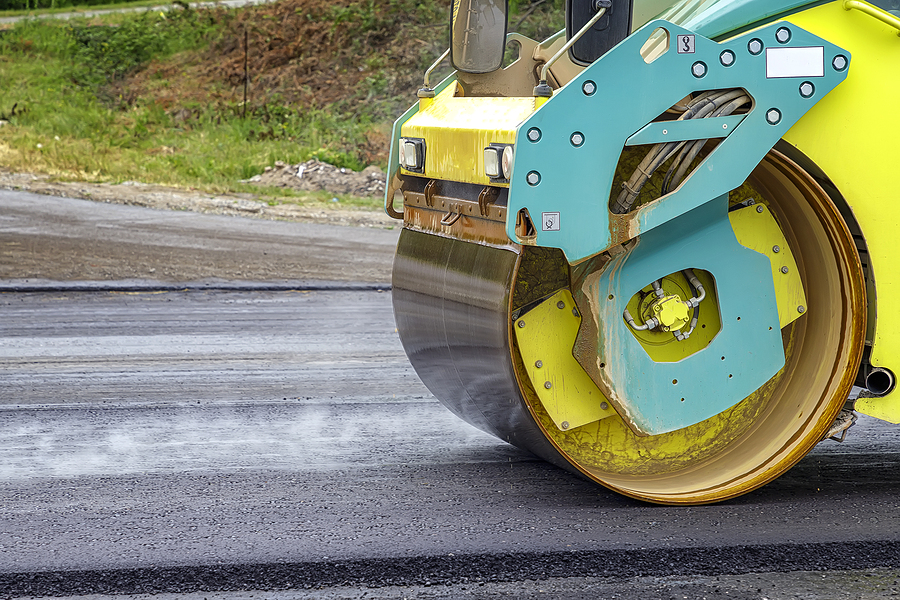
Project managers are often strapped with scheduling work for heavy equipment and are required to have adequate knowledge of the machines such as excavators and roller compactors that they take for hire in order to ensure that the projects that they manage run as smoothly as possible. Roller compactors come in a motley bunch of shapes, sizes and compaction type or method, some use vibration to compact soil, some use sheer weight, some use impact force and some use combinations of two or more methods in a single machine.
Therefore, in order to ensure optimal compaction, it is important for project managers to take into account certain factors prior to obtaining a drum roller rental. This article will examine some of the primary factors project managers or contractors need to consider before they move the project into the compaction phase which is undoubtedly critical to projects in the long term.
As most of us are already aware of, compaction is generally the second phase of a project after excavation and grading works are executed. The purpose of compaction is in essence to remove air pockets that are trapped in soil which lead to soil resettling when heavy structures a built on them resulting in structural failure of anything placed on them. The structural failure occurs when the consistent weight of any ‘build’ on the surface of uncompressed soil causes the soil to settle which destabilises the structure on top of them, be it a road or a building.
Soil that has been compacted adequately possesses a much higher weight bearing capacity while simultaneously minimising the level of soil contraction and settling. Therefore, it becomes imperative for project managers, contractors or even roller compactor operators to not just know the conditions of the project site, but also ‘know’ the ‘make up’ of the material that is going to be compacted prior to taking a roller compactor for hire.
This is because the type of compaction varies from soil type to soil type and different types of compactors are needed for different types of soil. From a broad perspective cohesive soil or material such as clay or silt for instance requires impact force compaction in order to remove water and air whereas granular material or asphalt is compacted better using vibratory compaction methods.
Another factor that must be taken into consideration is the size of the compactor, if the target compaction surface is in an environment filled with obstacles and congested, smaller compactors a more suitable as it will be easier for the operators to move around obstacles and achieve the desired compaction level.
Similarly, for wide open spaces, large compactors such as double drum rollers would be more practical as much fewer passes would be required to achieve the desired level of compaction. Last, but not the least is the option to buy roller compactors or rent roller compactors, between the two options it is generally advised to hire roller compactors based on the project specifications.