


Typography performs a vital role in internet design. Among all of the factors that shape the user revel in on a web site, font size is a essential one. It now not most effective affects clarity but also contributes to the general layout and accessibility of your website online. In this article, we’ll discover how HTML font size works, why it matters, and the way you could control it effectively the use of HTML and CSS.
Table of Contents
Why Font Size Matters in HTML
Font size determines how huge or small text seems in your webpage. If the font is simply too small, users can also war to examine your content material. On the opposite hand, oversized textual content would possibly look unprofessional or purpose format issues, mainly on mobile gadgets. Getting the font size proper is crucial for keeping a balance between aesthetics and value.
How Font Size Used to Work in HTML (The Old Way)
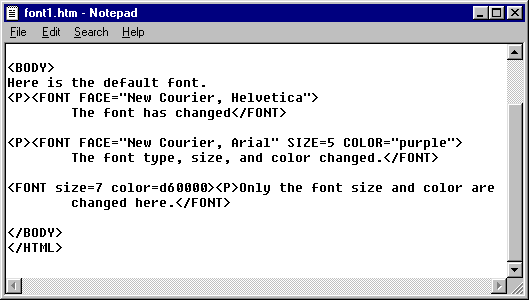
In early HTML variations, developers used the <font> tag to define the font size immediately in the HTML code.
For This approach used numeric values from 1 (smallest) to 7 (largest). While easy, this approach is outdated and now not recommended. The <font> tag is now deprecated in HTML5, which means it’s now not supported in modern net standards.
The Modern Way: CSS Font Size
Today, internet developers use CSS (Cascading Style Sheets) to govern the appearance of textual content, together with font length. Instead of the use of the <font> tag, styles are applied thru CSS either inline, internally, or externally.
Here’s the way to do it the usage of exclusive techniques:
1. Inline CSS
You can practice font length at once to an html font size element the usage of the style attribute:While short, inline patterns aren’t best for big tasks when you consider that they muddle your html font size .
2. Internal CSS
This method entails setting CSS within the <style> tag within the <head> phase of your html font size record:
3. External CSS
The best practice is to use an outside CSS record. This keeps your html font size smooth and makes coping with styles across more than one pages easier.
Units of Font Size in CSS
There are a couple of units you could use to set font length. Let’s smash them down:
1. Pixels (px)
Pixels are the most trustworthy. One pixel equals one dot on the display screen.
2. Ems (em)
An em is a relative unit primarily based on the discern element’s font size. For example, 2em method “twice the dimensions” of the parent.
3. Rems (rem)
rem is similar to em, however rather than the figure, it refers to the basis (<html>) element’s font size.
4. Percentages (%)
Font size also can be set as a percent of the figure detail’s font size.
5. Viewport Units (vw, vh)
You can use viewport gadgets to create responsive text that scales with display screen size.
Best Practices for Using Font Size in HTML
Use Relative Units
Prefer em, rem, or % over constant gadgets like px for higher scalability and responsiveness.
Set a Base Font Size
A not unusual exercise is to define a base font length at the <html> or <body> tag after which use rem gadgets for consistency.
Maintain Readability
Ensure body text is at least 16px on computer devices for excellent clarity. You can move barely smaller on cellular but take a look at very well.
Use Media Queries
Adjust font sizes primarily based on display screen width to beautify consumer experience on all devices.
- Common Mistakes to Avoid
Overusing Inline Styles
This makes your HTML harder to keep and goes towards the precept of separation of concerns. - Using Deprecated Tags
Avoid using the <font> tag. It’s previous and not supported in html font size. - Inconsistent Units
Mixing px, em, and % with out a strategy can lead to unpredictable behavior. - Ignoring Accessibility
Users with visual impairments depend on readable font sizes. Make certain your text is legible and scalable.
Conclusion
Font size in html font size is greater than only a layout preference—it’s a key element in how users experience your content. While the vintage <font> tag would possibly nevertheless paintings in a few browsers, cutting-edge internet improvement is based on CSS for flexibility, accessibility, and smooth layout. Whether you’re constructing a private weblog or a full-scale internet software, expertise and nicely placing html font size font length will assist make certain your content material is both beautiful and user-friendly.