

Git is a effective version manage system used by tens of millions of builders global to manipulate code and collaborate on tasks. While developing branches is a common part of any Git workflow, ultimately, those branches become old or pointless. Knowing how and when to delete a Git branch is important to retaining your repository smooth and maintainable. In this manual, we’re going to explore the secure and effective ways to delete branches the usage of Git, cowl crucial use instances, and highlight first-class practices.
Whether you’re running in a group environment or managing personal initiatives, knowledge the git delete branch procedure will help you stay organized and avoid confusion. Let’s dive into what it manner to cast off branches and how to do it with out disrupting your workflow.
Table of Contents
Understanding Git Delete Branch
Before leaping into the way to delete a Git department, it’s crucial to recognize what a branch represents. In Git, a department is largely a pointer to a selected dedicate. It allows developers to paintings on functions, computer virus fixes, or experiments independently of the primary codebase (commonly known as fundamental or grasp).
Branches make collaboration less difficult, but they also multiply quick. Over time, unused or merged branches pile up, making your repository cluttered. That’s why pruning your branches is crucial.
Why Delete a Git Branch?
- There are several reasons why you would possibly need to delete a branch in Git:
- Clean up after a merge: Once a feature branch has been merged into the principle branch, it typically isn’t wanted anymore.
- Remove deserted work: If a developer starts offevolved a department but does not end it, it can sit down idle inside the repo.
- Avoid confusion: Too many branches—in particular with indistinct names—can confuse collaborators.
- Reduce litter: Fewer branches imply a cleaner repository and higher basic performance.
- Removing old or stale branches is a easy preservation habit that benefits anyone involved in a venture.
How to Delete a Local Git Branch
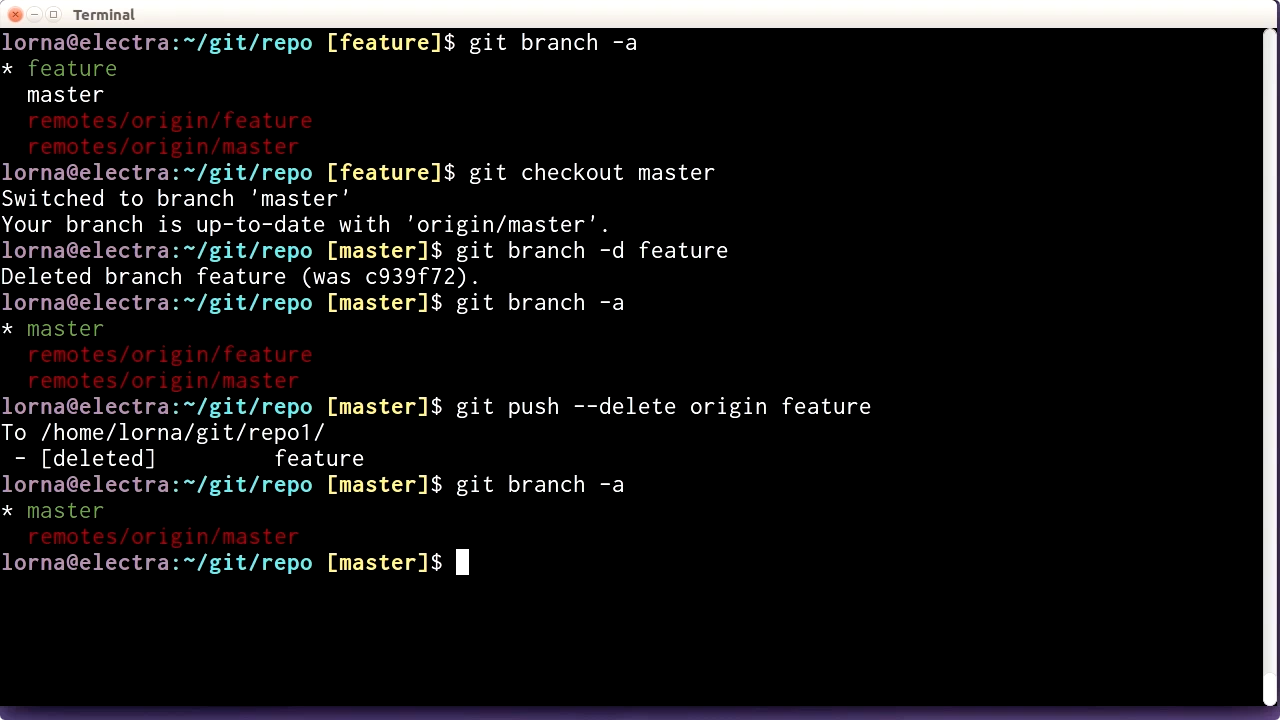
To eliminate a branch for your local device, you may use the following command:
This command deletes the local branch handiest if it’s been merged into your present day running branch or every other branch. Git will save you you from deleting unmerged changes this manner to avoid unintended information loss.
If you do need to delete a nearby branch that hasn’t been merged (and also you’re certain you don’t need it), use the pressure delete choice:
Git branch -D department-call
This will delete the branch regardless of its merge popularity. Use it with caution, specifically in case you’re running on crucial capabilities or fixes.
How to Delete a Remote Git Branch
Local cleanup is most effective a part of the system. If a department turned into pushed to a far flung repository like GitHub or GitLab, you’ll also want to take away it from there.
Here’s how: git push origin –delete department-call
This command tells Git to put off the specified branch from the far off repository. After executing this, collaborators gained’t see the department indexed anymore.
Alternatively, with a few Git services, you could additionally delete branches the usage of the web interface. For example, on GitHub, visit the “Branches” tab and click the delete icon next to the branch you need to put off.
Checking Which Branch You’re On
Before deleting whatever, make certain you’re not presently on the branch you need to delete. Git gained’t assist you to delete the lively branch. You can check your current department using:
Common Mistakes to Avoid
- While deleting branches is straightforward, a few common pitfalls can trip up even experienced builders:
- Deleting the incorrect department: Always double-test the department call. A typo can lead to irreversible deletion.
- Forgetting to push changes: If you delete a department before pushing it to far off, you may lose important work.
- Deleting lively branches: As stated, you may’t delete the branch you’re presently on. Always transfer first.
- It’s also correct exercise to talk along with your crew earlier than disposing of shared branches.
Best Practices for Branch Management
Good branch hygiene is about more than just understanding the way to delete a branch. Here are a few beneficial practices to observe:
Use clear naming conventions: Use descriptive names like characteristic/login-gadget or bugfix/header-format so branches are clean to understand.
Regularly clean up merged branches: Schedule periodic git delete branch opinions to cast off stale branches.
Protect key branches: Use branch protection rules on repositories to save you accidental deletion or pressure-pushes to important branches like important or launch.
Use pull requests: Incorporating pull requests into your workflow makes it less difficult to song what’s been merged and what can be accurately deleted.
Deleting Git Branches in GUI Tools
Many developers select the use of graphical interfaces like GitHub Desktop, Sourcetree, or GitKraken. These gear often offer visible ways to delete branches with a simple right-click on or from a menu option.
For instance, in GitHub Desktop:
- Go to the “Branch” menu.
- Select “Delete Branch” from the dropdown.
Confirm your desire.
These equipment make it simpler for novices or individuals who decide on not to work completely within the terminal.
Conclusion
Managing branches is a fundamental a part of operating with Git, and understanding how to nicely delete them guarantees your initiatives stay easy and easy to navigate. The git delete branch operation, whether carried out domestically or remotely, performs a key position in preserving repository hygiene. By following the stairs outlined on this guide, you could optimistically do away with unused branches with out fear of losing crucial work.
Just do not forget: deleting a department is everlasting, so continue carefully and always double-check what you’re putting off. With proper department control, your workflow will continue to be green, collaborative, and prepared.


